
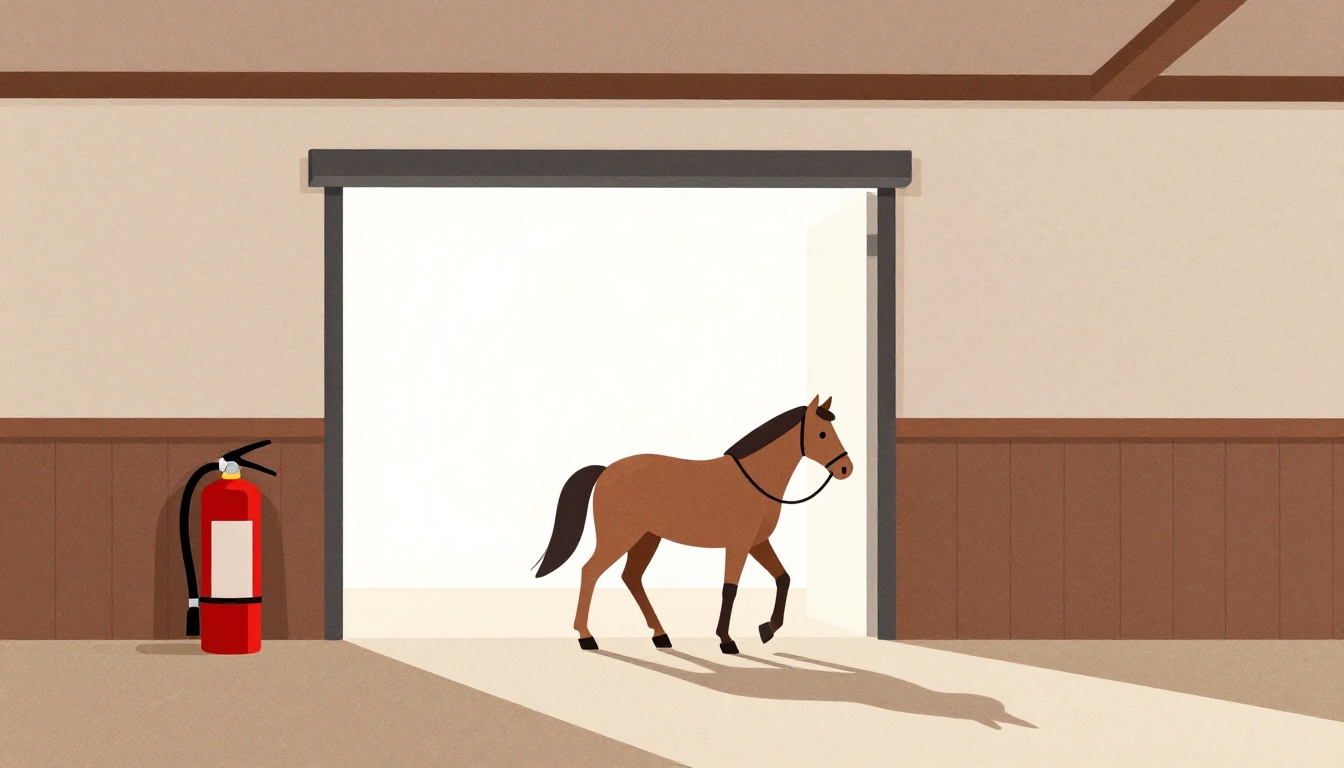
A barn fire can engulf a stable in five to seven minutes, and the majority of animals who die in barn fires die of smoke inhalation, not flames. Without a practiced evacuation plan, panic and confusion can cost precious seconds. This guide walks you through creating a stable-specific fire evacuation plan that protects both horses and people.
According to the British Horse Society, which horses should you evacuate first during a stable fire?
Select one answer.
Map your stable and identify escape routes
Start by drawing a map of your stable, marking every stall, aisle, door, and window. Identify two ways out of every area, including each stall and the main barn. According to OSHA guidelines, exit routes should be clearly marked, well lit, wide enough to accommodate evacuating personnel, and unobstructed at all times. Keep aisles, stall doors, and barn doors free of debris and equipment. A fire door is not an effective exit if it is blocked.
Assign evacuation priorities
Decide which horses to evacuate first. The British Horse Society advises: always start with the horses closest to the fire. Close the stable door after you have removed a horse, because loose horses will return to a burning stable. Consider factors such as a horse's temperament, ease of catching and leading, and location relative to the fire. Have halters and lead ropes available for each horse, stored in a consistent, accessible location.
Designate a safe assembly area
Choose an outside meeting place for people and a separate, secure pasture or paddock for evacuated horses. The assembly point should be upwind and at a safe distance from the barn. Ensure the area is fenced and free of hazards. Practice moving horses to this location so they become familiar with the route.
Prepare an evacuation kit and equipment
Keep the following items ready and accessible:
- Halters and lead ropes for every horse, labeled by stall
- Flashlights with spare batteries
- A battery-powered AM radio
- Human and equine first-aid kits
- A list of emergency contacts, including the fire department and a veterinarian
- A trailer or transport plan for each horse, if evacuation off-site is needed
Conduct regular fire drills
A fire drill every six to twelve months is essential. Include the horses when you practice. According to Penn State Extension, you should create an evacuation plan and practice it, including the horses. Rehearse quickly and safely loading horses onto a trailer in both daytime and nighttime conditions. Drills help horses become accustomed to the process and reveal any logistical problems in your plan.
Coordinate with local fire services
Invite your local fire department to visit your stable. They can review the barn's design, point out structural problems, and provide recommendations for making it safer. Firefighters trained in horse handling can make a critical difference during an actual emergency. Provide them with a copy of your evacuation plan and a map of the property.
Review and update your plan annually
Your evacuation plan is a living document. Review it at least once a year, or whenever you make changes to the stable layout, add new horses, or acquire new equipment. Update contact lists and ensure all halters and leads are still in good condition and properly stored.
How the Resident Expert Can Help
Creating a comprehensive fire evacuation plan is a key component of equine safety standards and risk management. Randi Thompson, founder of the Equine Safety and Success Network (ESSN), offers consulting services to help stable owners develop and implement effective safety protocols. With over 45 years of experience in the equine industry, she can guide you through assessing your facility's risks and building a plan tailored to your operation. Visit Randi Thompson Live to learn more about equine safety consulting and risk management services.
Quiz
Test your knowledge with this quick quiz based on the article.
Question: According to the British Horse Society, which horses should you evacuate first during a stable fire?
Options:
- The horses closest to the fire
- The most valuable horses
- The horses farthest from the exit
Correct Answer: The horses closest to the fire