
What percentage of infectious organisms can be removed from stall surfaces through proper cleaning alone?
Select one answer.
Why daily stall cleaning is your first line of defense
A dirty stall isn't just unpleasant — it's a direct threat to your horse's health. Ammonia from urine-soaked bedding irritates the respiratory tract, while manure and moisture create a breeding ground for pathogens like Streptococcus equi (strangles), equine herpesvirus-1 (EHV-1), and Salmonella. Research shows that cleaning removes up to 90% of infectious organisms from surfaces, making daily mucking the single most effective biosecurity measure you can take.
The daily protocol: remove, reset, inspect
A thorough daily cleaning takes about 20 minutes per occupied stall. Follow these steps every day:
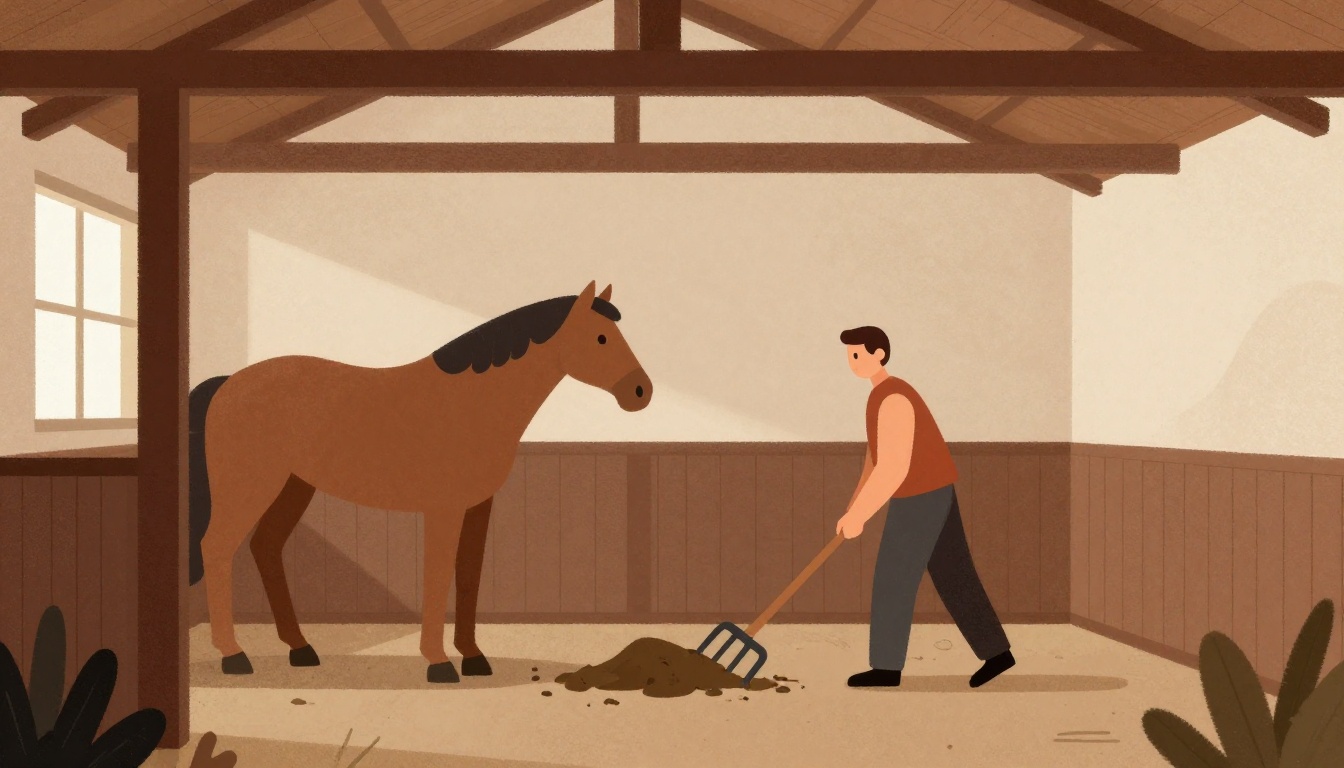
- Remove manure and wet bedding — Use a manure fork and pitchfork to strip all soiled material. Pay special attention to corners and under water buckets where moisture collects.
- Shake and save clean bedding — Separate reusable bedding from waste. This reduces waste and keeps the stall deep and comfortable.
- Level the remaining bedding — Spread clean bedding evenly to create a dry, cushioned surface.
- Check stall hardware — Inspect doors, latches, and walls for loose boards, sharp edges, or damage. Catching a cracked board early prevents injury.
- Sweep the aisle — Remove dust and debris from the barn aisle to reduce airborne particles that can settle back into stalls.
Why ammonia control matters
Ammonia, produced from the breakdown of urine, is a potent respiratory irritant. High levels can lead to chronic airway inflammation and increased susceptibility to infection. Daily removal of wet bedding keeps ammonia levels low and supports lung health for both horses and barn staff.
Weekly deep cleaning and disinfection
Once a week, strip the stall completely. Remove all bedding, scrub walls and floors with warm soapy water, and allow surfaces to dry thoroughly. Surfaces cannot be disinfected if organic matter is present — organic debris inactivates most disinfectants. After cleaning, apply an approved disinfectant such as accelerated hydrogen peroxide (AHP) or a 1:10 bleach solution. Allow the disinfectant to dry completely before adding fresh bedding.
Special considerations for high-traffic facilities
Barns that host visiting horses, lessons, or shows face higher disease risk. Disinfect stalls between occupants, especially after a horse returns from an event. At shows, spray empty stalls with a bleach solution and let them dry before bedding — that extra 10 minutes can prevent introducing strangles or other contagious diseases to your herd.
Create a written biosecurity plan
Document your daily and weekly cleaning schedule, including:
- Daily sanitation duties
- Weekly deep-clean tasks
- Trailer cleaning schedule
- Quarantine protocols for new or sick horses
A written plan ensures consistency, even when different staff members handle chores. Post it in the barn and review it with all employees.
Quiz: Test your knowledge
What percentage of infectious organisms can be removed from stall surfaces through proper cleaning alone?
- 90%
- 50%
- 25%
Correct answer: 90% — cleaning removes up to 90% of infectious organisms, making it the essential first step before disinfection.
How the Resident Expert Can Help
Implementing effective stall cleaning protocols is a core component of a comprehensive equine safety and risk management program. Randi Thompson, founder of the Equine Safety and Success Network (ESSN), offers consulting services to help barn owners and facility managers develop operational protocols that protect horses and people. With over 45 years of experience, she can guide you in creating a written biosecurity plan tailored to your facility. Visit Randi Thompson Live to learn more.