
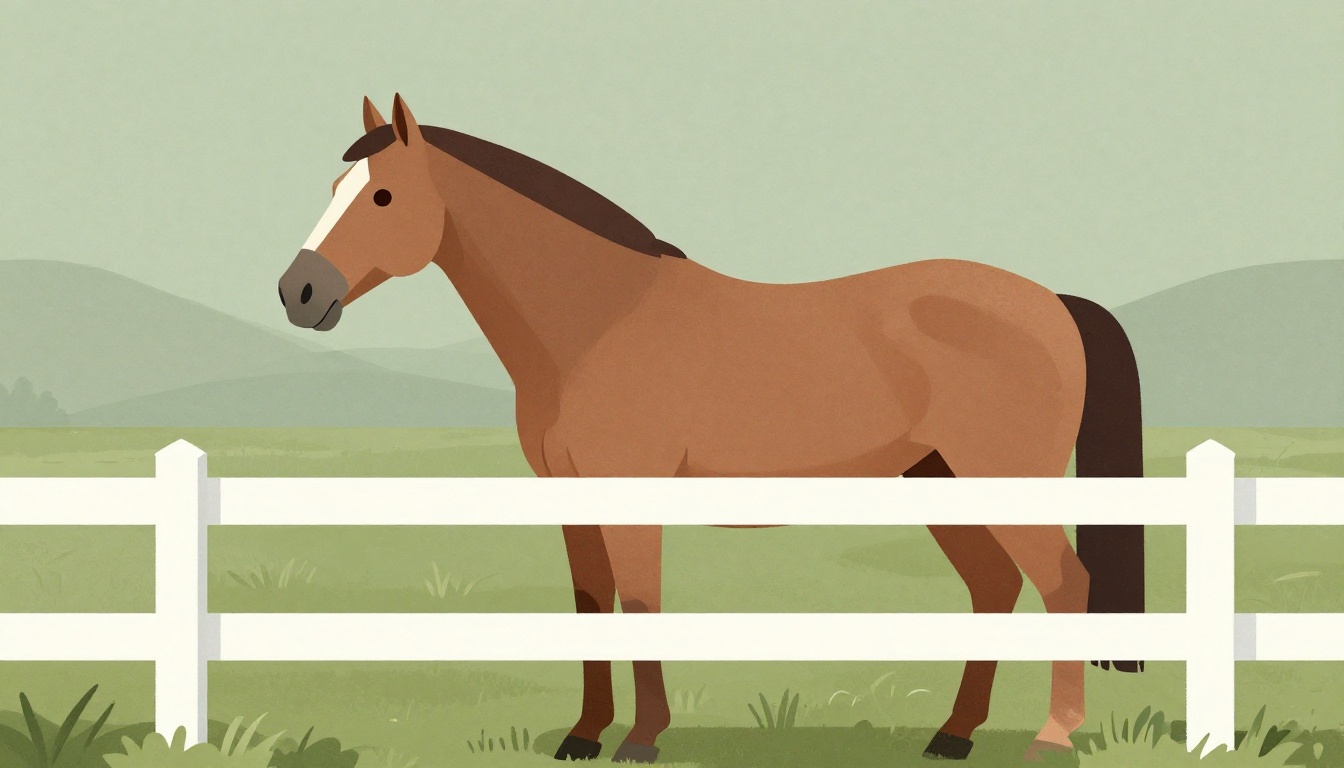
Which of the following is the minimum recommended height for a horse pasture perimeter fence?
Select one answer.
Why fence safety matters for horses
Horses interact with fencing constantly — they lean, rub, run, and graze along boundaries. Unlike cattle or other livestock, horses have delicate skin, long legs, and a strong flight response. A poorly designed or maintained fence can cause serious injuries: cuts, splinters, entanglement, puncture wounds, and even death. Assessing your pasture fencing regularly is one of the most effective ways to reduce risk and protect your horses.
Key safety criteria for horse fencing
When evaluating any fence, focus on four core factors: height, visibility, material safety, and maintenance. Each plays a critical role in preventing accidents.
1. Height
Perimeter fencing for horses should be at least 5 feet (1.5 metres) tall, according to University of Minnesota Extension (source). Taller fences — up to 6 feet — are recommended for high-pressure areas like arenas, turnout lots, or stallion enclosures (source). A fence that is too low invites horses to jump or reach over, increasing the risk of escape and injury.
2. Visibility
Horses need to see a fence clearly to avoid running into it. High-visibility options include white plank wood or PVC, coated wire rails, and electric tape. A fence that blends into the background — such as dark wire in a shaded pasture — can cause collisions, especially when horses are startled or playing.
3. Material safety
Not all fencing materials are safe for horses. Here is a breakdown of common types:
- Wood post-and-rail: Highly visible and sturdy, but requires regular maintenance to prevent rot and splintering. Horses may chew wood, leading to damage and potential health risks.
- Vinyl post-and-rail: Low-maintenance and splinter-free, but can become brittle in cold weather and may break under pressure.
- Coated wire mesh: Safe when openings are small enough to prevent hoof or leg entrapment. Diamond mesh is a premium option but expensive.
- Electric fencing: Effective as a psychological barrier, but must be combined with a visible component (tape or rail) to prevent accidental contact. Poly tape and rope are common, but some experts caution that they may not carry current reliably.
- Barbed wire and pig wire: Never use these for horses. Barbed wire causes deep cuts, punctures, and entanglement injuries (source).
4. Maintenance and inspection
Even the best fence can become dangerous over time. Conduct a walk-through inspection at least monthly, and after storms or heavy use. Look for:
- Loose, broken, or sagging rails
- Exposed nail heads, sharp edges, or projections
- Rotting wood posts or cracked vinyl
- Gaps at corners where horses could trap a leg
- Vegetation growing into electric fence lines (drains current)
- Damaged or disconnected energizers on electric fences
Actionable checklist for assessing your pasture fence
Use this checklist during your next fence inspection:
- Measure fence height — is it at least 5 feet everywhere?
- Check visibility — can horses easily see the fence from a distance?
- Inspect all materials for sharp edges, splinters, or cracks
- Ensure no barbed wire or pig wire is present anywhere horses have access
- Verify that wire mesh openings are small enough to prevent leg entrapment
- Look for loose boards, sagging wire, or broken posts
- Check corners — are they rounded or blocked to prevent trapping?
- Test electric fence voltage and inspect connections
- Confirm that all posts are firmly set and not leaning
- Remove any debris, fallen branches, or overgrown vegetation touching the fence
Common mistakes to avoid
- Using barbed wire — even as a top strand. It is the leading cause of severe fence-related injuries in horses.
- Ignoring corner design — square corners can trap a horse being chased by another. Rounded corners or blocked-off corners reduce this risk.
- Overlooking gate areas — gates should be sturdy, latch securely, and swing freely without sharp edges.
- Assuming all electric fencing is safe — electric fences must be highly visible and properly maintained to prevent accidental contact.
Quiz: Test your knowledge
Which of the following is the minimum recommended height for a horse pasture perimeter fence?
A) 4 feet B) 5 feet C) 6 feet
Correct answer: B (5 feet)
How the Featured Expert Can Help
Assessing pasture fencing is just one part of a comprehensive equine safety program. Randi Thompson, founder of the Equine Safety and Success Network (ESSN), brings over 45 years of experience helping barn owners and equine professionals evaluate safety standards, risk management, and operational protocols. For expert guidance tailored to your facility, visit Randi Thompson Live.