
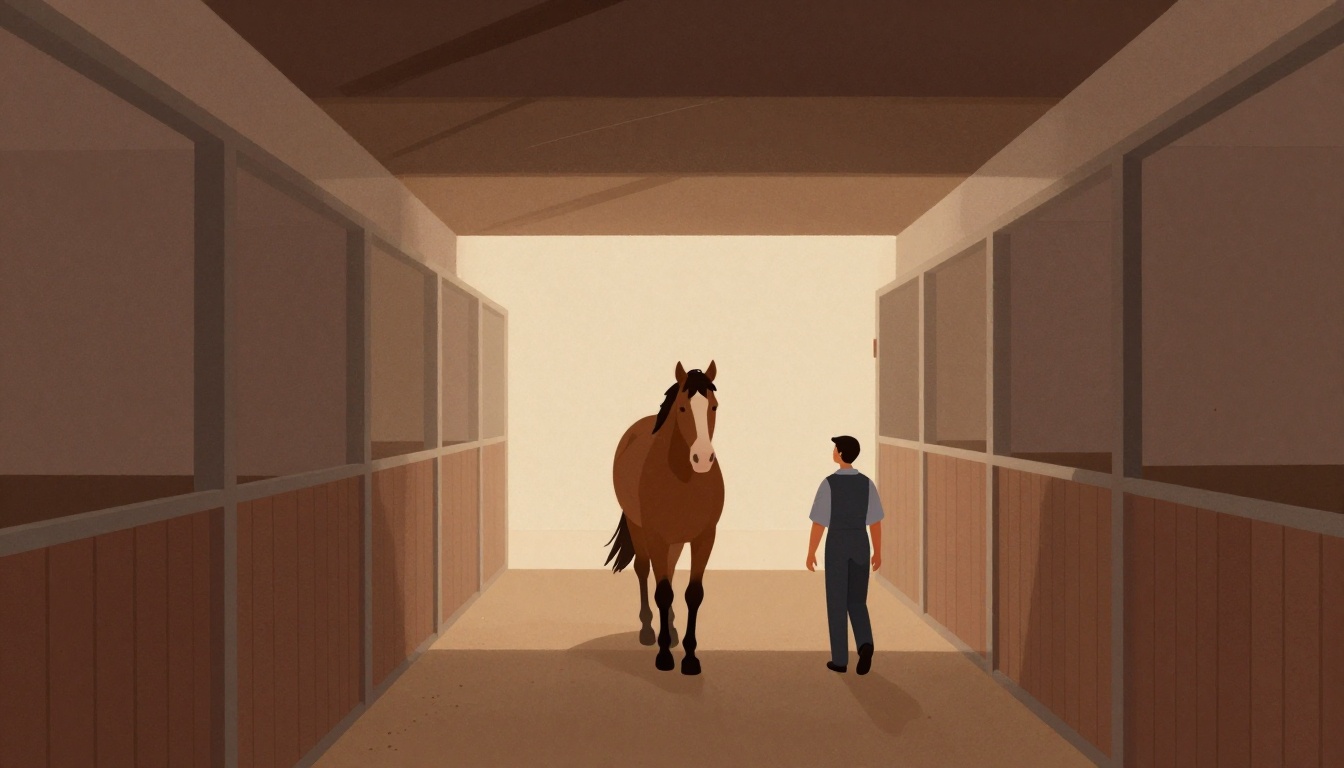
A barn aisle that's too narrow is a daily hazard. It increases the chance of accidents and can make those accidents worse, since horses and humans don't have room to get out of the way. Whether you're building new or working with an existing structure, understanding the right aisle width is a core part of equine safety standards and risk management.
What is the recommended minimum aisle width for a private horse barn?
Select one answer.
The 12-foot minimum rule
Industry experts consistently recommend a minimum aisle width of 12 feet for horse barns. American Stalls strongly recommends this as the baseline, noting that wider is always better. Remuda Building echoes this, calling 12 feet the minimum and warning that anything narrower can lead to daily frustration and safety compromises.
This width isn't arbitrary. It allows two horses to pass each other comfortably, gives handlers room to lead horses without being pinned against stall fronts, and provides space to turn a horse around if needed. A 12-foot aisle also supports safe cross-tying, a common practice in many barns.
When 12 feet isn't enough
While 12 feet is the minimum for most facilities, certain operations need more. Stable Style recommends 14 to 16 feet for larger boarding facilities and show venues. Lester Buildings notes that 14 feet gives extra room for carts and deliveries, and that wider aisles help keep sightlines clear, which keeps horses settled.
Consider your specific activities:
- Breeding barns with mare and foal pairs benefit from wider aisles to accommodate leading multiple horses out.
- Facilities using machinery like tractors or manure trailers need extra width for safe maneuvering.
- High-traffic barns with many boarders or lessons should err on the wider end of the range.
Evaluating your existing aisle
If you're working with an existing barn, you can still improve safety even if you can't change the width. Start by measuring your aisle at its narrowest point—doorways, posts, and built-in features can reduce effective width.
Here's a practical checklist:
- Measure the clear width at several points, not just the middle of the aisle.
- Identify obstructions: tack trunks, blanket bars, water faucets, and hoses all reduce usable space. Equine Facility Design recommends keeping the aisle clear of clutter and storing equipment in dedicated rooms.
- Check ceiling height: low-hanging beams or low ceilings can cause injury if a horse spooks or rears. Aim for a minimum 10-foot ceiling height above the aisle.
- Assess flooring: slippery concrete or worn rubber mats are dangerous, especially when horses come in from wet conditions. Invest in non-slip, interlocking rubber mats or pavers.
- Review door hardware: sliding doors are safer than doors that swing into the aisle, especially in narrower spaces.
The cost of getting it wrong
A narrow aisle isn't just inconvenient—it's a liability. Rutgers Equine Science Center notes that buildings are the site for almost 30% of all farm-related injuries. An aisle that's too narrow can increase the chance of accidents and make those accidents worse, since horses and humans don't have room to get out of the way.
In legal terms, failing to meet recognized safety standards can be a significant factor in liability cases. If your barn is involved in an incident, the aisle width will be part of the evaluation.
Making the case for wider
If you're planning new construction, the message is clear: go as wide as you can afford. American Stalls points out that while wider aisles increase construction costs, they offer advantages that outweigh the initial investment—from emergency safety to everyday comfort.
A 12-foot aisle is the minimum, but 14 feet is a better target for most operations. If you're building a facility that will serve multiple horses, boarders, or the public, 14 to 16 feet is the safer choice.
Quiz: Test your knowledge
What is the recommended minimum aisle width for a private horse barn?
- 8 feet
- 10 feet
- 12 feet
Correct answer: 12 feet. Industry experts, including American Stalls and Remuda Building, recommend a minimum of 12 feet for safe horse movement and handler safety.
How the Featured Expert Can Help
Randi Thompson, founder of the Equine Safety and Success Network (ESSN), brings over 45 years of equine industry experience to help barn owners and operators assess safety standards, manage risk, and improve operational protocols. Her consulting services focus on practical, real-world solutions that protect horses and people. To learn more about how she can help you evaluate your facility, visit Randi Thompson Live.